How to Sell a Covered Call Option Contract
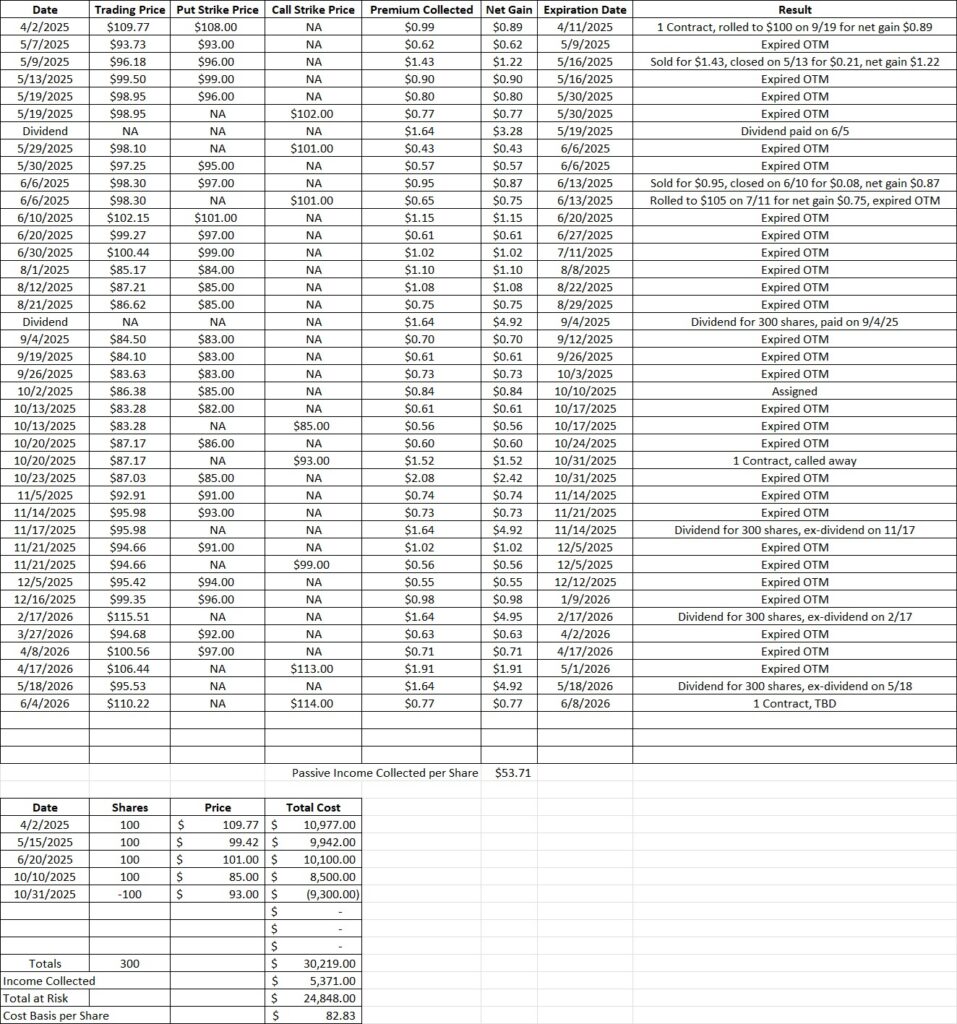
Today we’re going to walk through how to sell a covered call option contract. We currently hold 300 shares of UPS in this stock market portfolio. We’ve worked our basis down to $83.08 per share including the most recent dividend. We’re also using weekly options trades to reduce that basis further. We just received a Here are links to some of our recent options trades for cash flow on UPS. Since UPS has weekly option contracts available we don’t need to wait for the expiration on the third Friday each month. We’re able generate passive income selling stock options weekly on UPS using options with a weekly expiration date.
UPS went ex-dividend back on 5/18 and their next earnings announcement is not until the end of July. That gives us some time to do a few trades without needing to worry about a scheduled event.
We like to use stock option contracts to earn option premium to buy or sell shares. Generally we’d prefer to generate passive income selling stock options versus buying or selling shares outright. In this case, we’ve been trading UPS for about a year and we’re up about 32%, using our current basis of $83 compared with today’s trading price of $110. That’s a good position. When we walk through how to sell a covered call option contract we want to consider our cost basis per share.
UPS is trading around $110 today. With our cost basis of $83.08 per share we can sell a covered call very close to the current trading price. If our shares are called away we’ll still be in a profitable position. When we sell to open a covered call we’re creating an obligation to sell shares at the strike price on or before the expiration date. If the price movement of the company stays below our strike price, the call option contract will expire worthless out of the money. If the trading price rises up through our call strike we can either let the shares go at the strike price or adjust the position.
We’d like to create some consistent monthly cash flow, so we’re going to sell some option premium here. We’re only going to sell one call option contract. One contract presents 100 shares, so if the price movement goes over our call strike and we have shares called away we’ll still hold 200 shares. Our premise with this trade is to use the time decay of the option premium to create consistent cash flow. If the trade expires out of the money we’ll keep the premium and then sell another covered call option next week.
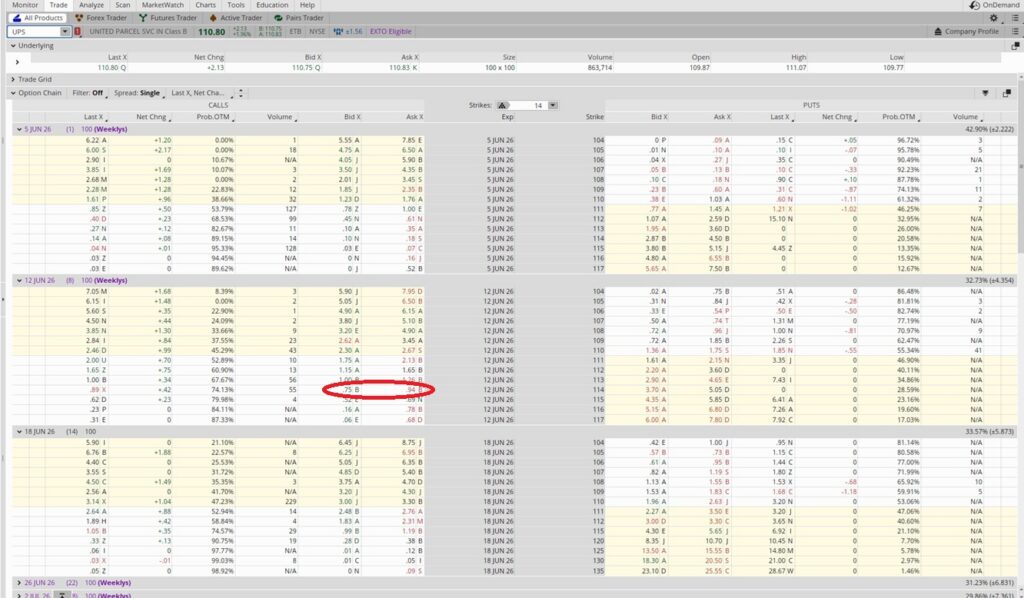
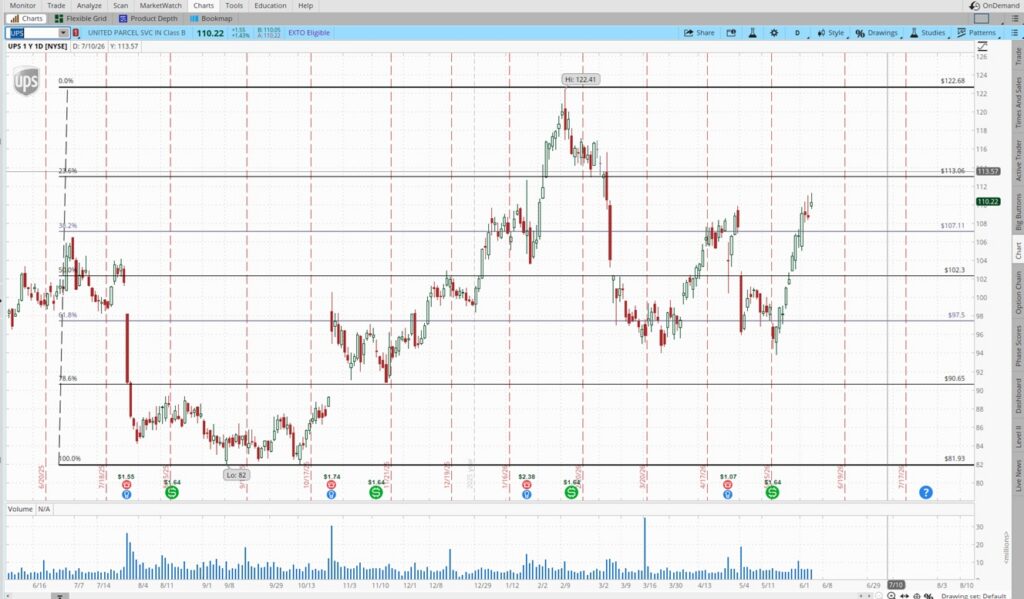
When we choose our call option strike price we use a candle chart as reference point. We can see UPS trading at $110 today. We can see a Fibonacci line at $113 and another resistance level just under $114. So we’re going to go with the $114 strike for the 6/12 expiration date. Those levels of resistance are not a guarantee, but do make it more likely that any upward price movement could be delayed by a day or two. It could also mean the trading price pulls back downward from there. We just need the trading price to be below our strike price through expiration. We’re playing a version of ‘beat the clock’ with this trade.
We can also see that UPS has had an aggressive move upward these last two weeks. It was trading as low as $94 on 5/19. So in two weeks it’s jumped 17%. That’s a big move, and we think a larger move right now is unlikely. We’ll take advantage of that with this options trading strategy as part of our long term investing plan.
Here’s a video that walks through this trade and reading the chart in more detail.
We sold to open the $114 covered call for the 6/12 expiration date for $0.77. That brings our basis down to $82.83 per share. If we have one contract of shares called away at $114 our new basis will be $67.24 per share on 200 shares. If this option contract expires out of the money we’ll still have 300 shares. And then we’ll be in a position to sell another covered call at the expiration date.